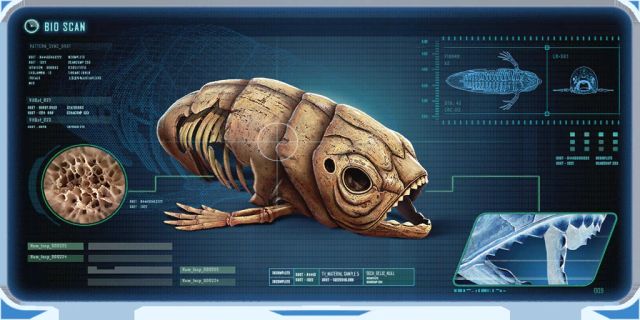
Remains of Research Specimen
Picture
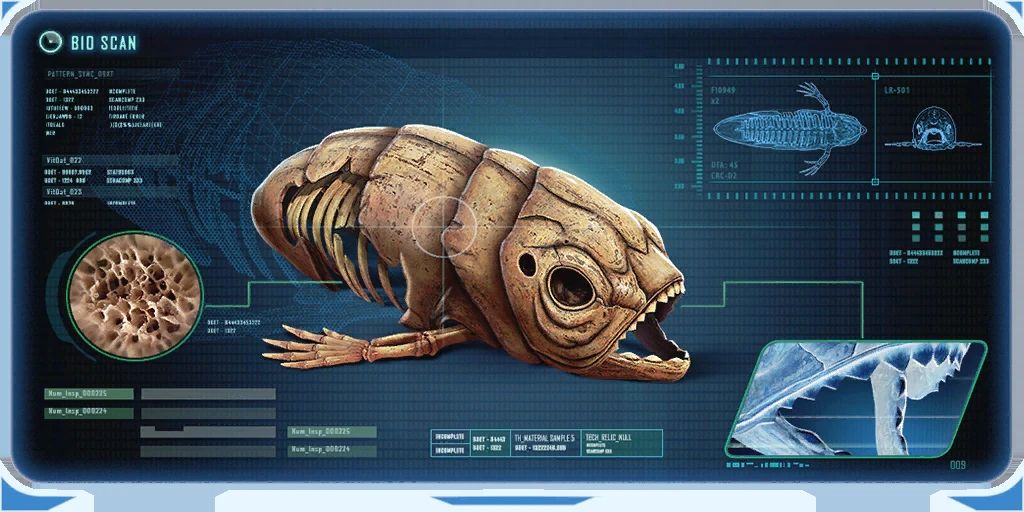
Databank entry
The skeletal remains of a vast predator, housed within an artificial habitat.
1Habitat
The environment constructed to house the specimen suggests it was kept alive in containment for research purposes for months, or even years. Organic matter indicates the habitat once supported extensive plantlife, though it has since decayed. When the facility collapsed this specimen was either left to die, or killed on the spot.
2Evolution
While it shares some skeletal traits with the biter and sand shark, including its distinctive double eye sockets, this fossilized specimen is significantly larger, and features unusual forearms rarely seen in aquatic species. This species has likely gone extinct in the past thousand years, and its evolutionary relatives have evolved almost beyond recognition.